
The K-Shaped Recession
two economies continue to divulge

Come for the economics. Stay for the books, links, and rabbit holes that earned a bookmark (favorite books of 2025 and my favorite finance books). Dive into what the ultra-rich are doing with their money in New Investment Strategies.
TL; DR: Beneath the AI boom and tech-stock melt-up, a very different economy is showing up. Jobs are still growing, but not everywhere. Consumers are getting pinched by gas prices and inflation. Lower-income households are showing real stress. Meanwhile, Big Tech is pouring cash into AI infrastructure, and the market is rewarding the companies selling the picks and shovels.
That is the K-shaped economy in one sentence: one side is tightening the belt; the other is building data centers (here is the previous primer on the K-Shaped economy).
Jobs
Inflation
Consumers are taking a hit
AI spending continues to increase
Picks and shovels
Keep reading
Jobs
In April, the U.S. economy added 115,000 jobs, but the growth is concentrated in sectors such as healthcare and retail.1
Tech tells a different story. According to Yahoo Finance, tech jobs are down 11% from their November 2022 peak. Coincidentally, ChatGPT launched that same month.
That does not mean “AI took all the jobs.” But it does show one of the defining features of this economy: tech companies can keep growing revenue, profits, and market value without adding workers at the same pace; here is the visual on the impact:
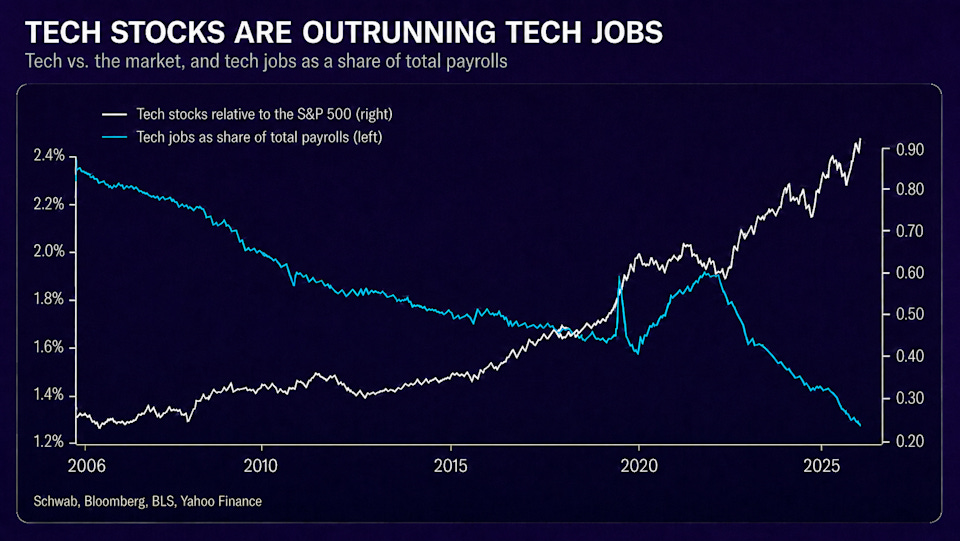
More capital per worker is classic K-shaped economy behavior. The companies at the top keep scaling. The labor market underneath them gets less forgiving. And now inflation is coming back!
Inflation
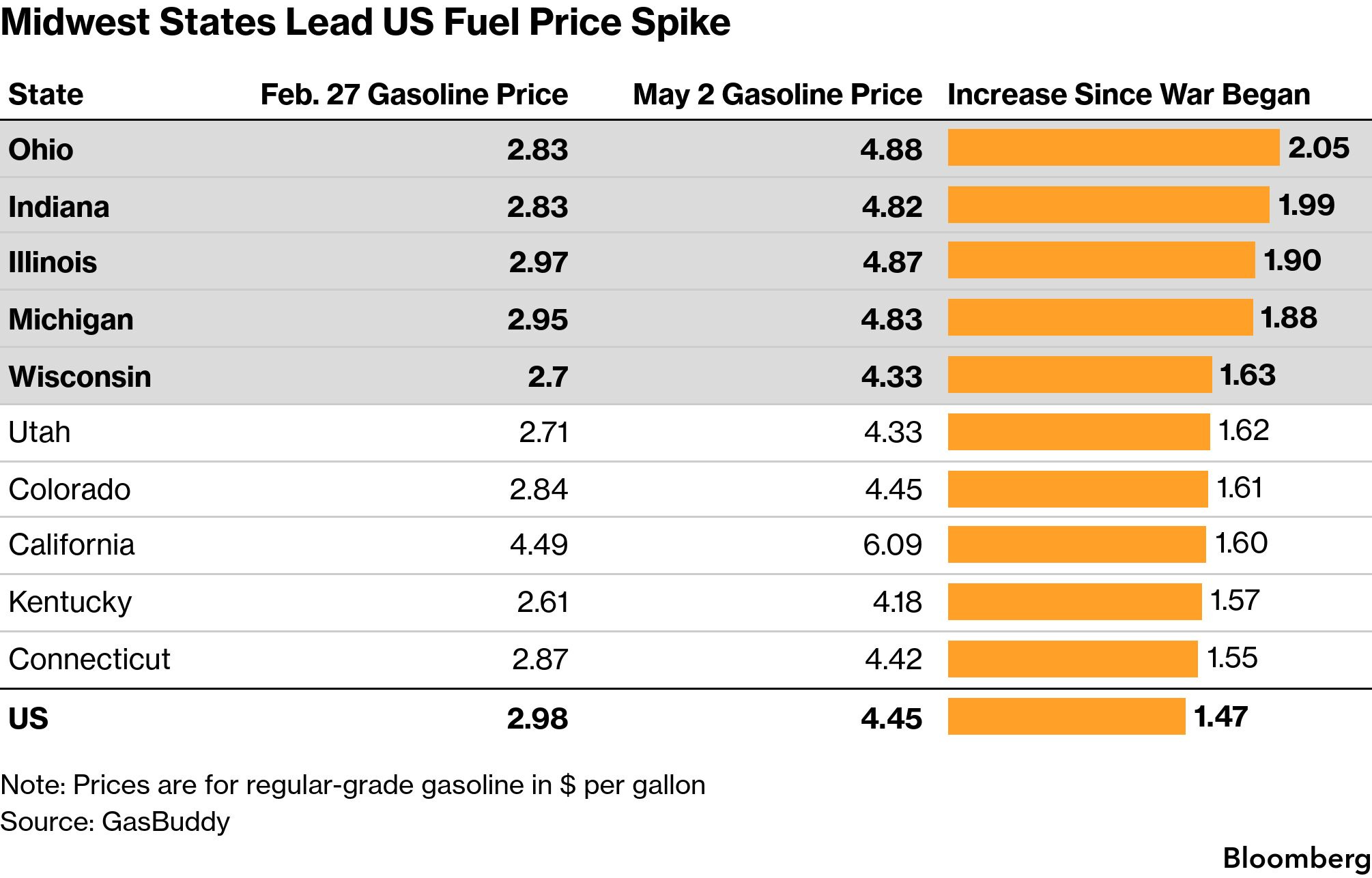
Anyone not living under a rock has noticed the spike in gas prices. What surprised me is where the pain has been focused—the Midwest has seen some of the largest increases:
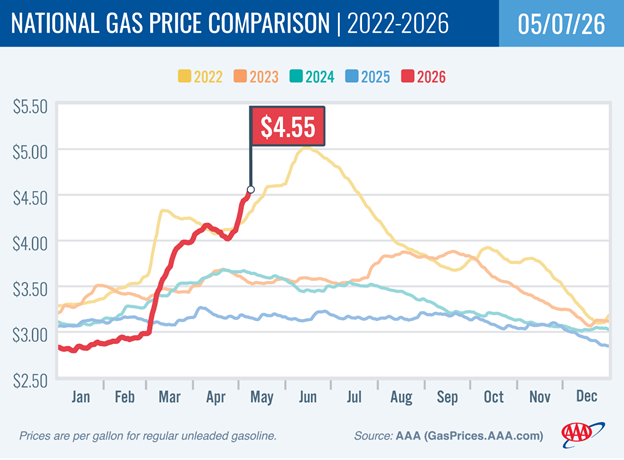
The National gas price average has crept up to $4.55 and is in shouting distance of the all-time high of ~$5.00 during the Ukraine War energy shock in 2022:
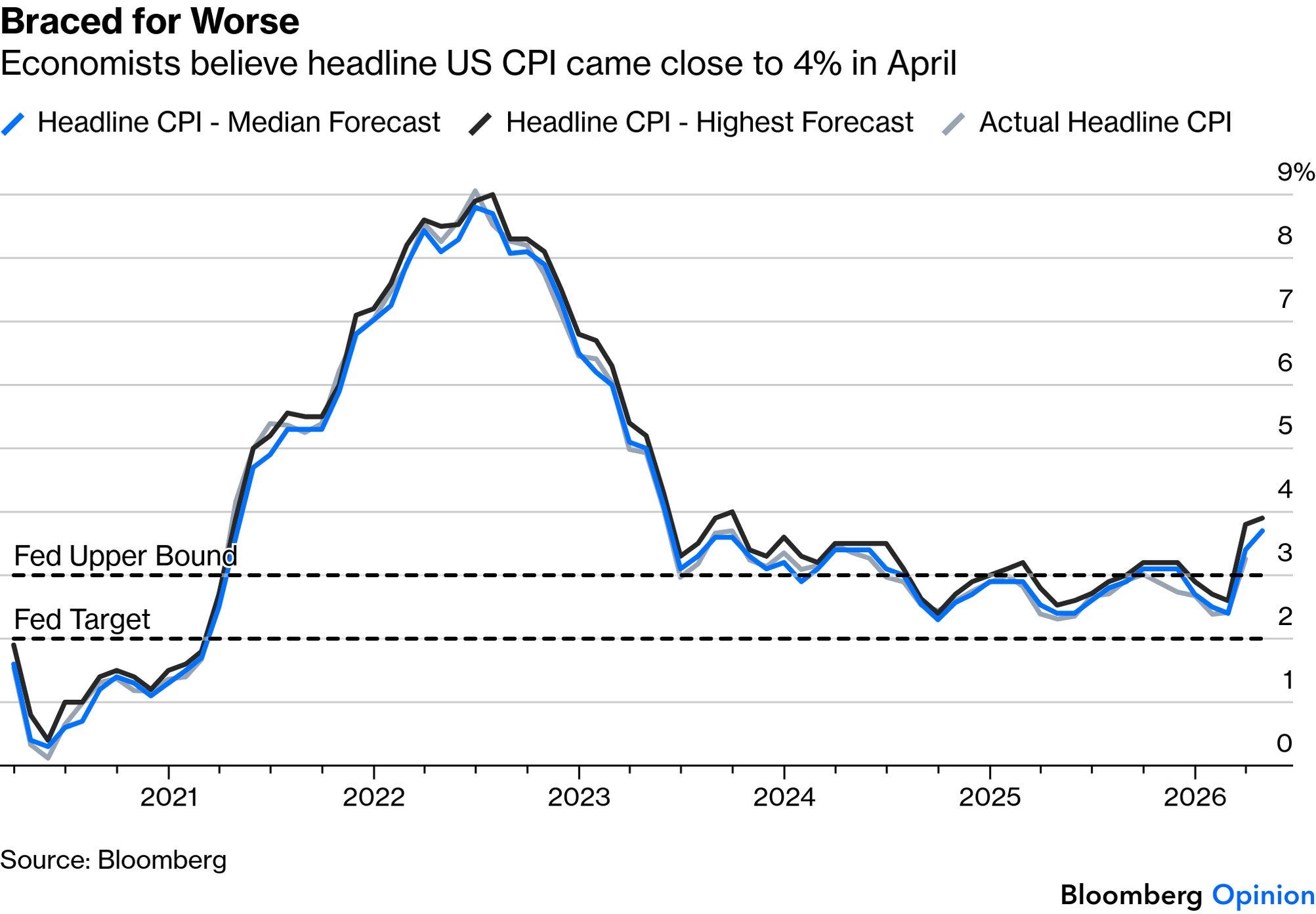
Higher gas prices matter because they hit twice. First, they act like a direct tax on consumers. Second, they can feed into broader inflation expectations, especially if forecasts start drifting back toward 4%:
Consumers are taking a hit
Companies are taking note of inflation crimping consumers.
Consumer-facing companies are saying the quiet part out loud: lower-income households are under pressure.
McDonald’s CEO put it plainly: higher gas prices and inflation disproportionately hurt lower-income consumers.
Kraft Heinz’s CEO was even more direct: lower-income households are “literally running out of money at the end of the month.”
Dine Brands, the parent company of Applebee’s and IHOP, is seeing the same thing: price-sensitive customers are staying home more often or trading down to cheaper alternatives.2
That is the consumer side of the K-shaped economy. The stock market can be ripping while a meaningful chunk of households is still counting the days until the next paycheck.
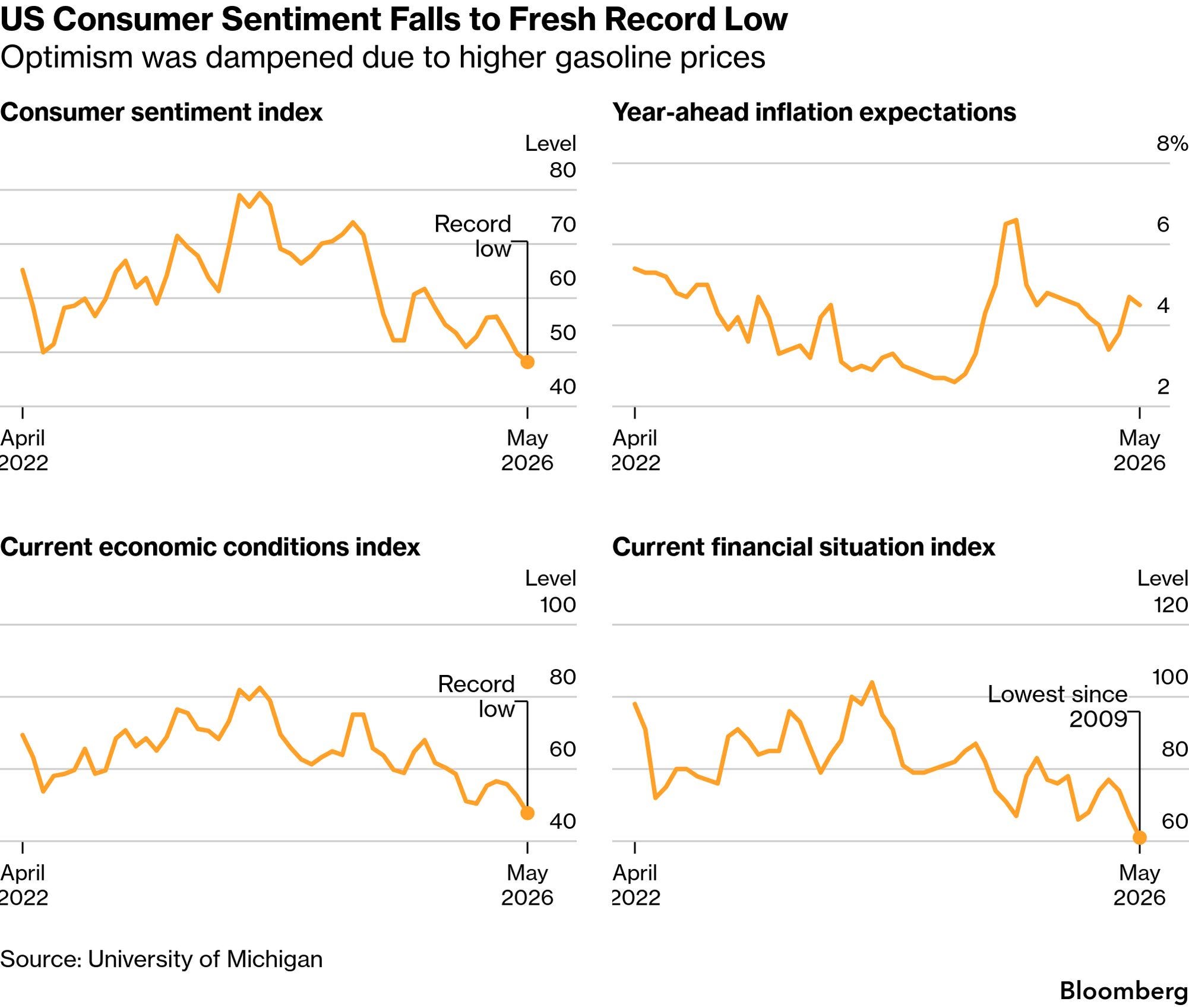
Crimped consumers are leading to historically low sentiment:
AI spending continues to increase
Consumer vibes may be in the dumps, but the AI spending machine has not gotten the memo.
Oracle, Meta, Google, Amazon, and Microsoft are spending so much on AI infrastructure that it is beginning to reshape their cash-flow profiles:
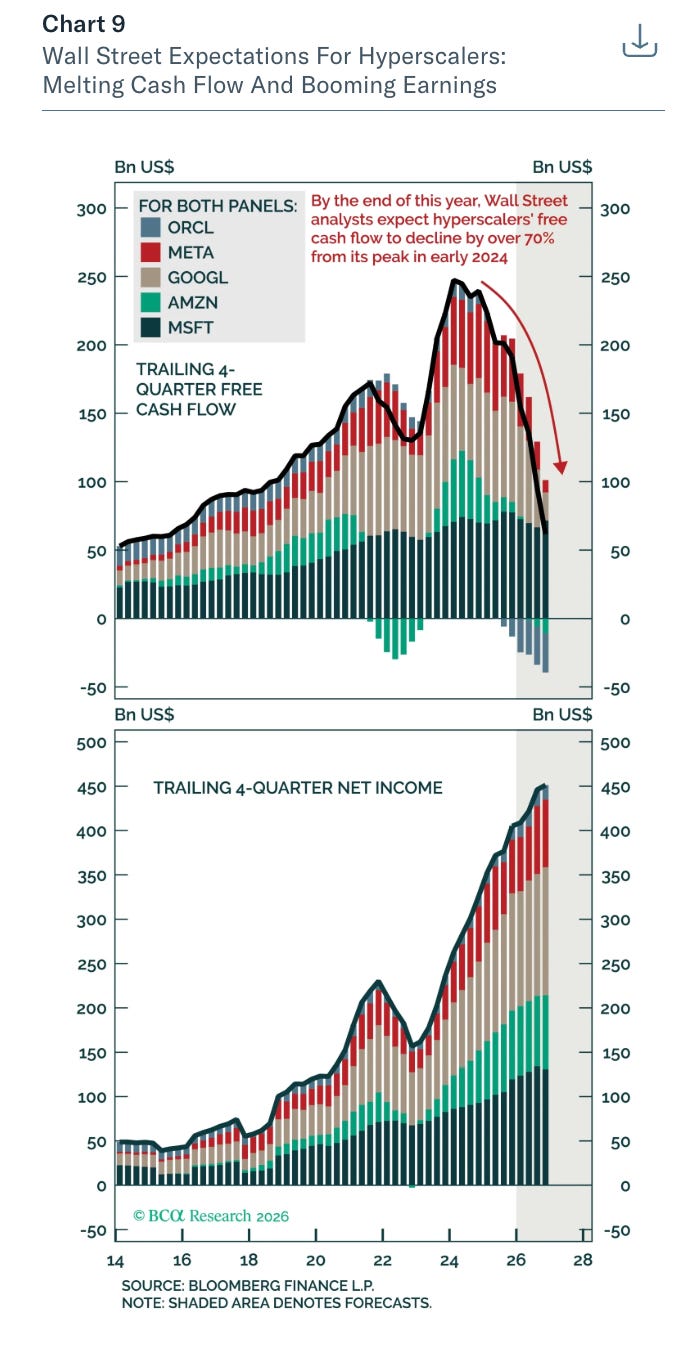
To me, this feels like a “burn the ships” moment for Big Tech. They’re taking all of their free cash flow and pouring it into investing.
Interesting to a finance nerd like me, is that despite this massive investment, it’s not impacting their net profits! How can this be?! It’s an accounting quick.
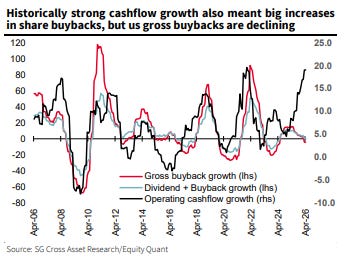
The need for computing is bidding up chip prices, which is bolstering semiconductor profits. At the same time, chip purchases are treated as capex rather than expenses. You can see the issue in what companies are doing with their actual cash, not their real profits—they’re not returning as much to shareholders!
Gross buybacks are declining:
Corporations return capital through dividends and buybacks. Since ChatGPT’s release in 2022, both dividends and buybacks have decreased on net.3
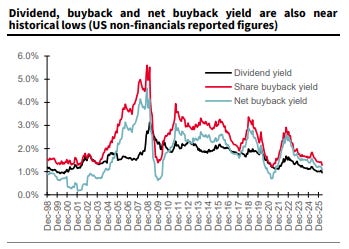
I don’t categorize this as “stress” in tech companies, but you can see their cash flow is changing, and so they’re responding to the new environment.
At the same time, Anthropic grew 80x over the first quarter!!4
Picks and Shovels
Earlier, I mentioned that semiconductor companies are one of the clearest beneficiaries of the AI buildout.
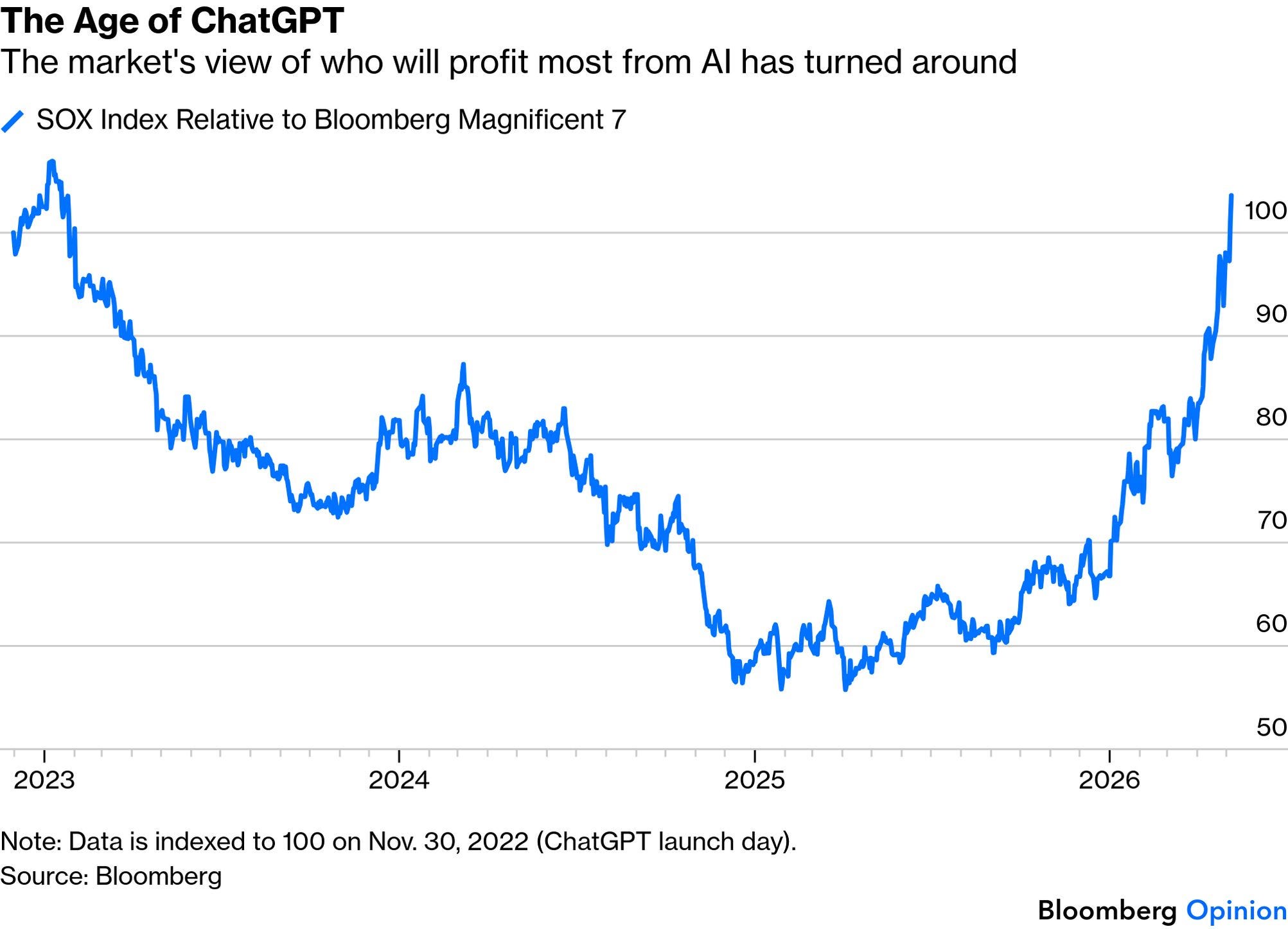
The market sees it too. Semiconductor stocks, as measured by the SOX Index, have surged above the large tech platforms:
Future profits (as measured by SOX EPS—earnings per share) are skyrocketing as well:
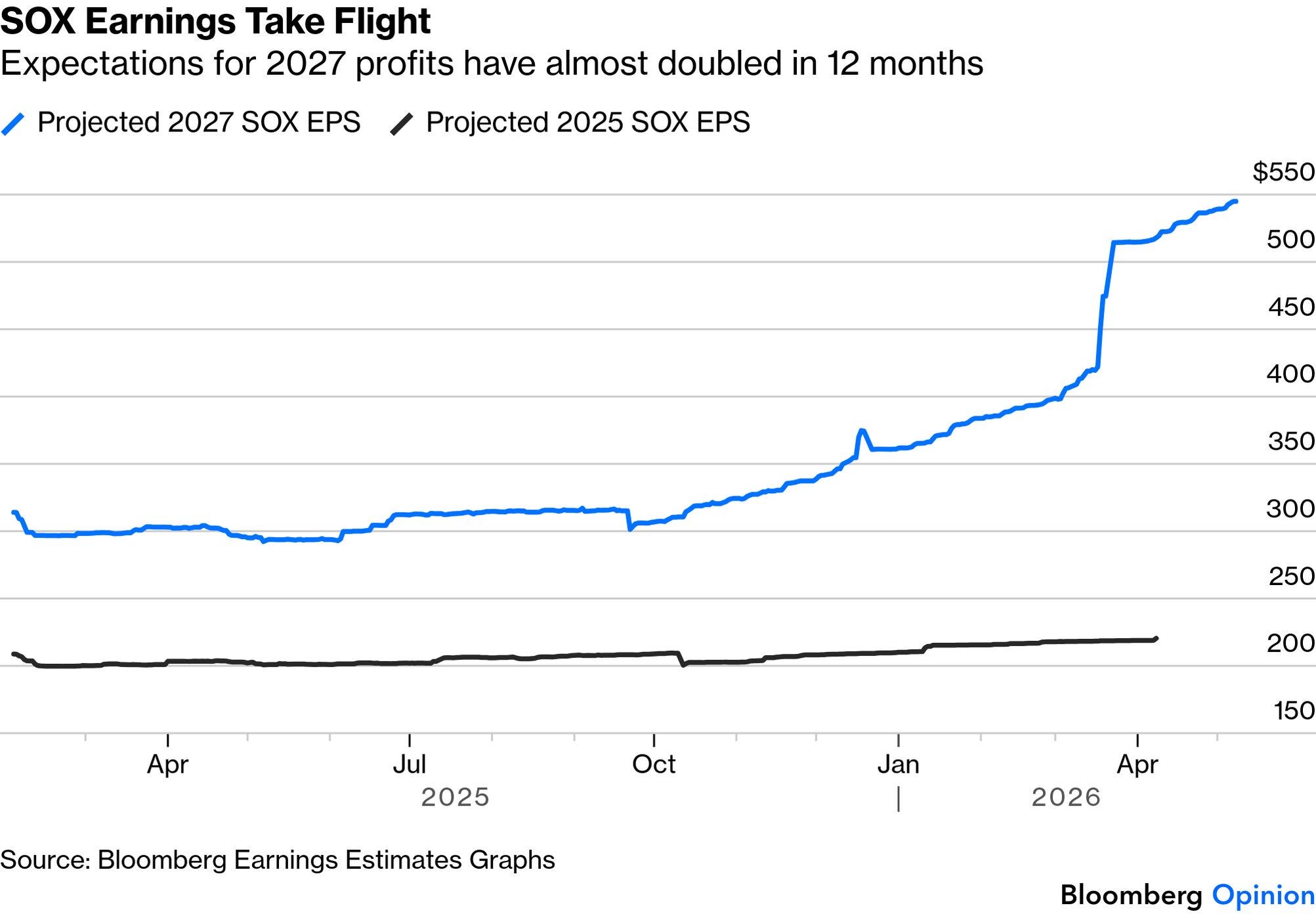
The market is effectively saying, “Big tech companies are cool and all, but the real money accumulates to the people supplying the tools for the AI buildout.”
Investing in tool suppliers is what I call the picks-and-shovels investment thesis. For the most part, the people doing the digging for gold (in this case, big tech) didn’t make the most money. It was the people supplying the picks and shovels (semiconductors)!
Keep Reading
What does the stock market do on average?
TL: DR—Markets go up over time, but rarely in a straight line. Double-digit pullbacks are normal, bigger selloffs happen every few years, and the lesson for investors is to expect volatility and embrace (or don’t invest in stocks).
Curious about Rare Earth Metals?
TL: DR—Rare earths are abundant, but the ability to refine them is scarce. China owns that choke point; the U.S. is exposed because of it, and tariffs do not solve the deeper supply-chain problem.
Looking to travel? Check out Paris and Tuscany
Are you panicking about the impending economic calamity?! Check my Millennial Guide for Surviving Continued Once-In-A-Lifetime economic events.
Here are some of my recent favorite books with overviews: Apple in China, How to Make a Few Billion Dollars, and Breakneck: China’s Quest to Engineer the Future.
Looking to hire a financial advisor? Ask them these questions.
DISCLOSURE
The information presented is solely for educational purposes. The information, statements, comments, views, and opinions expressed in this podcast and newsletter do not constitute and should not be construed as an offer to buy or sell securities or make or consider any investment or course of action. The views or opinions expressed in the podcast and newsletter are the author’s views and do not reflect the opinions and beliefs of the podcast and newsletter, its affiliates, the author’s employer, or any other person. The podcast and newsletter do not undertake any duty to publicly or otherwise update or revise any disseminated information.
Here are the full quotes:
McDonald’s CEO: “We’re all seeing about it in the press right now, gas prices, inflation on that, that is going to disproportionately impact low-income consumers. And so we expect the pressures there are going to continue.”
The Kraft Heinz CEO: “They’re literally running out of money at the end of the month. We’re seeing negative cash flows in the lower-income brackets where they’re dipping into savings.”
Dine Brands Global CEO: “We’re seeing the most pressure on lower income consumers, and as a result, this is driving greater focus on offerings that combine compelling price points with quality, abundance, and differentiated experiences like Applebee’s 2 for $25 value platform and IHOP’s everyday value menu...our price sensitive, more value-oriented guests seem to be staying home a bit more and/or looking for lower cost alternatives.”
I’d caveat that the yield will go lower if the stock price is higher. So if you keep your dividend the same, but the stock doubles, your dividend yield is cut.